Showing posts with label classic car. Show all posts

The M3 Broke 100 M.P.H. in the 1/4 Mile but I'm Still Boring


June 26th.  That's the last time I wrote a car blog.  Why?  I've been writing blogs for over 10 years and I've learned that you should write when the muse hits you strong and you're feeling humorous.  Sometimes a glass of wine helps.  The best blogs write themselves.  But that's not why I'm writing tonight. I'm writing tonight because I can.  I'm away on business, which means I can't do anything else productive.  So I have two options, go wander around Seattle at 10 P.M. until I get robbed, or update the car blog.  So.. come on muse, hit me... please. Nothing. Is there wine around here?

First, an update.  In June I told you the BMW was frustratingly close to hitting 100 m.p.h. at the Woodburn drag strip (99 m.p.h. multiple times).   Well, I got the opportunity to try again.  Inexplicably, on a Friday night date, my wife and I found ourselves "driving past" the dragstrip and I begged Kellie to let me make a few runs and she (suspiciously) agreed.

I wanted to lower the weight of the car to gain that needed one mile-per-hour, so I took out the rear seat, spare-tire, stroller(s), stuffed animals, blankets, beach toys, etc.  My lightening attempts didn't work, and I couldn't hit 100 m.p.h.  So for the last run Kellie, who'd been watching from the stands, joined me. We put the seat, tire, jackets, stroller(s), etc back in and went out for one last launch down the track.

And we hit 100.  Apparently the M3 needed some weight holding the rear tires down?   Baffling.


I received a NHRA 100 mile-per-hour club sticker.  I'm proud of it.  How many other M3 owners have those? Probably not many, they're too busy cutting you off in traffic.  I was cut off today on the way to Seattle, by my car's twin.  I felt a little self-deprecation with my anger.  It was good though, it turns out self-deprecation and anger are the perfect emotions for Seattle and are the summary every Nirvana grunge song on the radio here.

Not long after the drag race I took my father out to the Portland Historic Races.  I had one of those light-bulb moments as we walked around.  I was about to say, "You don't have anything like this in your (small town in the middle of nowhere), do you?", when I realized five miles from his house in every direction are a BAZILLION miles of dual sport trails and he has about 10 running dual-sport motorcycles in his harem, not to mention 20 that may run someday.  My dad's freedom to have fun with a motorized machine blows my opportunities out-of-the-water.  Yay, once a year I can watch old rich dudes drive their expensive cars carefully around a race track.

I think the local vineyard owners should take their fences down so I can ride my dual sport nearby.  Britain has something called "the right to roam".  As a fenced in yuppieite I'd like to know more about this.

This summer my buddy Andrew put an LS motor in his land cruiser.  I helped guide it in.  Really, that's the coolest car thing I've done in the last 3 months.  The truck is awesome now.


Now, how about an update on my Lotus project?

Ok, I hate calling it a Lotus because I'm like one of those guys that builds a Fiero with a Lamborghini bodykit and calls it a Lambo.  Its a Fiero!  But my problem is, I didn't start with a Fiero, I started with... nothing... a pile of metal sticks.  I don't think I like what it could be called, being a British design.  In my politically correct grade school days they preached that a faggot wasn't a homosexual, it was a British pile of sticks.  Fine, apparently there's a faggot beside my house.

But British car people are cool.  Aside from watching the rich dudes at the Goodwood Revival truly race their pretty cars hard (and smash them), I met this British gentleman, rallying across the U.S., cleaning his car in front of Starbucks in downtown Portland because... why not?


The frame for my Lotus/Carish Thing is pretty well finished.  I know I'm going to have to re-weld shock mounts, the steering column frame, etc. but at least I can move on and deal with those as fitment issues.

Before and After

Right now I'm re-building and welding the front end. The Ford Mustang II front-end is awesome because parts are cheap!  I bought the hub/rotors for $30, with the Chevy bolt pattern that fits my spare M3 wheels!  They did cheap out on the wheel studs though.  When I placed a M3 wheel up to the hub, the wheel studs stuck out only a 1/4 inch, not enough for lug nuts.  And of course they were a size of stud that doesn't come in longer lengths, so now I'm tapping out the hubs for larger 3" studs I found on clearance at Summit.

Why I'm Re-Welding A Arms

Yes, I know that last paragraph was incredibly boring.  I'm bored too.  Considering deletion.

See, this is why the writing muse hasn't hit me.  Building cars around the frame is BORING.  I'm even bored when I'm doing it.  My friends think I like to work on cars.  I don't.  I just want to drive a fake Lotus Seven and I can't afford one that's finished.  So here I am.

One last note on building the Lotus, I somehow managed to match the 400 holes (not exaggerating) on the bottom of the frame to my new steel floorboards for riveting. Don't ask how, it's beyond boring and it took me two days.  But I did it, and I feel some sense of accomplishment.


Oh, and I found an older picture of my own Lotus/Car Type Thing when browsing Google Images for Lotus Sevens.  Turns out my car was a featured car on barnfinds.com when someone sold it in 2015. It was still ugly in 2015.


Argh, Mark Knopfler automotive lyrics just played on my radio and they blow away anything my mind can produce tonight.  I'll leave you with something well-written (and with British words again).  It's the least I can do after writing this blog.  Music and lyrics to Border Reiver by Mark Knopfler -


Southern bound from Glasgow town
She's shining in the sun
My Scotstoun lassie on a border run
We're whistling down the hillsides and tearing up the climbs
I'm just a thiever stealing time in the Border Reiver

A hundred thousand on the clock and plenty more to go
Crash box and lever - she needs the heel and toe
She's not too cold in winter but she cooks me in the heat
I'm a six-foot driver but you can adjust the seat in the Border Reiver

"Sure as the Sunrise"
That's what they say about the Albion
"Sure as the Sunrise", that's what they say about the Albion
And she's an Albion
She's an Albion

The Ministry don't worry me my paperwork's alright
They can't touch me
I got my sleep last night
It's knocking out a living wage in 1969
I'm just a thiever stealing time in the Border Reiver


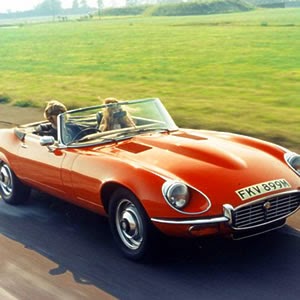
1966 Jaguar E-Type 4.2 Series I


Near-original 1966 Jaguar E-type coupe, manual, 2-seater, Primrose Yellow with Tan interior, chrome wire spoke wheels in my collection. Painted in a bright yellow, it is the same colour as the E described by British comedian Charlie Drake as "my custard torpedo". This car brought definition to the word "patina" -- its un-restored, original interior is just as it was 50 years ago.


The Jaguar E-type was an instant classic, an exercise in cool aerodynamic theory and unashamed showmanship, producing probably the most beautiful sports car of the 60s. It had the ability to live up to the looks, too. The 150mph (241kph) that Jaguar claimed for the E-type was devastatingly quick in 1961 (in reality only the tweaked-up press cars could achieve it, and 140 (225kph) was nearer the truth), making the new Jaguar Britain's fastest production car. Better still, it was probably Britain's greatest bargain price-wise, undercutting its nearest rival, the Aston Martin DB4, by a third.

JAGUAR E-TYPE (1961-75) 
Engine: Straight six/V-twelve
Capacity: 3781/4235/5343cc
Power: 265bhp
Transmission: 4-speed manual - 3-speed auto
Top Speed : Up to 150mph (241kph)
No. Built : All models - 72,507

A photograph of my E-type digitally enhanced.

.

1981 Jaguar Lister


Standard Jaguar XJ-S that was taken off the production line by Lister, taken to the Lister factory in England and fitted with a 5.3 V12 engine, modified to 7-litre with a 6-speed manual gearbox and wider wheels, embossed leather interior and it developed 600BHP at the flywheel, giving a top speed of 302kph.


Lister Cars is a British sports car manufacturer founded by Brian Lister in 1954 in Cambridge, England, which became known for its involvement in motorsport. Sold in 1986, Laurence Pearce produced variants of the Jaguar XJS before producing a bespoke sports car, the Lister Storm. In 2013, Lister Cars was acquired by Lawrence Whittaker's company Warrantywise. Production of the original sports car restarted in 2014 and ten continuation Lister Jaguar Knobblys were built to celebrate Lister’s 60th Anniversary. In 2016 The Lister Motor Company announced the build and sale of The Lister Knobbly Stirling Moss.


1974 MGB GT


My latest acquisition - an Olde English White 1974 MGB GT with 3-door hatchback coupé body and Line-4 1799 cm3 / 109.8 cui, 62.5 kW / 85 PS / 84 hp (DIN) 5-speed manual powertrain.


1798cc 4 cylinder inline - 95 bhp @ 5400 rpm 
Gearbox : 4 speed manual with overdrive
Brakes : Disc front, drum rear 
Front suspension : Coil & Wishbone
Rear suspension v,
Steering : Rack and pinion

The MGB is a two-door sports car manufactured and marketed by the British Motor Corporation (BMC), later British Leyland, as a four-cylinder, soft-top roadster from 1962 until 1980. Variants include the MGB GT three-door 2+2 coupé (1965–74), the six-cylinder roadster and coupé MGC (1967–69), and the eight-cylinder 2+2 coupé, the MGB GT V8 (1973–76).

Replacing the MGA in 1962, production of the MGB and its variants continued until 1980, achieving sales for the MGB, MGC and MGB GT V8 combined of 523,836 cars. The MGB bodyshell was reprised in modified form with a limited run of 2,000 MG RV8 roadsters (1993–95).

.

Quick list : Top 10 Classic British Sports Cars Ever Made
Jaguar XKE (1961–1974) 
. 
Quick Info: 
Largest Engine: 5.3L V12 
Layout: Front Engine with Rear Wheel Drive 
Made in Coventry, England 
.
Morgan Plus 4 (1950-1961) 
. 
Quick Info: 
Largest Engine: 2.1L Inline 4 
Layout: Front Mid Engine with Rear Wheel Drive 
Made in Malvern, Worcestershire, England 
.
Austin Healey Sprite (1958-1971) 
 . 
Quick Info: 
Largest Engine: 1.3L Inline 4 
Layout: Front Engine with Rear Wheel Drive 
Made in Abingdon, England 
.
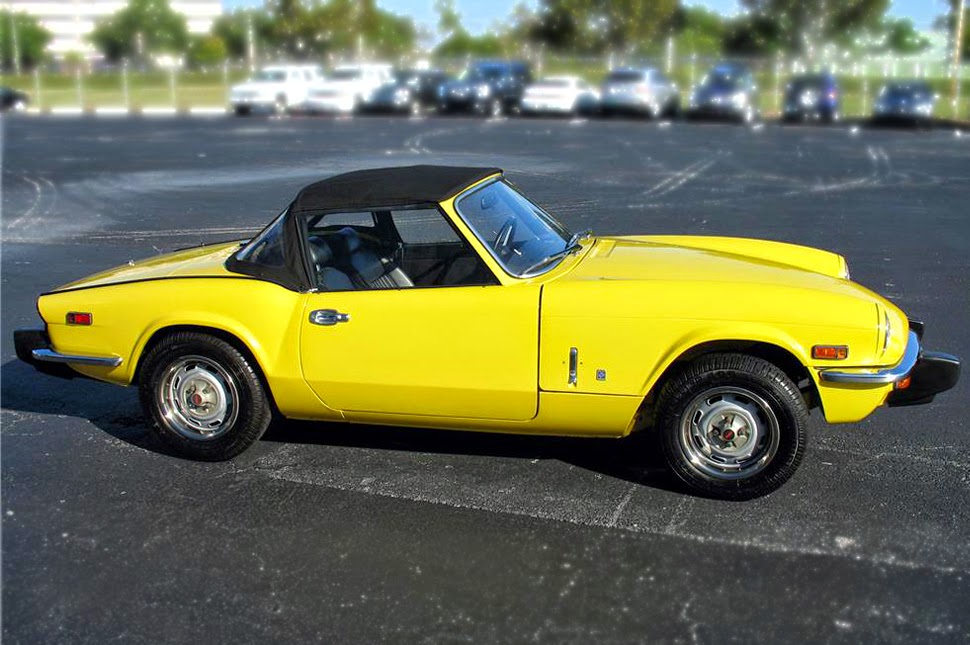
Triumph Spitfire (1962-1980) 
. 
Quick Info: 
Largest Engine: 1.3L Inline 4 
Layout: Front Engine with Rear Drive 
Made in Canley, Coventry, England 
.
MGA Roadster (1955-1962) 
. 
Quick Info: 
Largest Engine: 1.6L Inline 4 
Layout: Front Engine with Rear Drive 
Made in Abingdon, England 
.
AC Ace (1953-1963) 
. 
Quick Info: 
Largest Engine: 2.6L Inline 6 
Layout: Front Engine with Rear Drive 
Made in West Norwood, London, England 
.
Austin Healey 3000 (1959-1967) 
. 
Quick Info: 
Largest Engine: 2.9L Inline 6 
Layout: Front Engine with Rear Drive 
Made in Abingdon, England 
.
Aston Martin DB5 (1963-1965) 
. 
Quick Info: 
Largest Engine: 4.0L Inline 6 
Layout: Front Engine with Rear Drive 
Made in England 
.
Bentley 4 1/2 Litre “Bentley Blower” (1927-1931) 
. 
Quick Info: 
Largest Engine: 4.4L Supercharged Inline 4 
Layout: Front Engine with Rear Drive 
Made in Cricklewood, England 
.
Lotus Elite (1958-1963) 
.
Quick Info: 
Largest Engine: 1.2L Inline 4 
Layout: Front Engine with Rear Drive 
Made in Filton, England 
.
Info from "Zero to 60"

.

Adding A Collectible Car To Your Portfolio For Fun And Profit


Well-heeled enthusiasts are dropping some serious money on collectible cars these days, not only as investments but as rolling works of art that can be appreciated as few appreciable assets can – out on the open road.

Collectible cars have always been a great investment and there are a lot of people out there who love cars and feel more comfortable putting their money in auto-mobiles than leaving it stagnate in a bank account.

Although there’s no crystal ball that lets an investor determine the future value of a collectible car, here are a few helpful tips for those looking to add one or more vintage rides to their portfolios as well as a wish list of 10 up-and-coming classic models that can be expected to grow in value over the coming years.

- Choose a particular model more for its personal and emotional appeal than strictly as an avenue for profit. Choose what you like, something you’ll enjoy driving and owning, and if there’s a dividend down the road – congratulations.

- But a word of caution - some cars may have great visual appeal that may not translate into value or reliability. In other words, do your homework and use the Internet and other resources to determine which models are most-desired by other collectors and to help estimate current values.

- Inspect the car thoroughly for rust, accident damage or any other faults

- As is the prudent course of action when buying any used vehicle, buy vintage cars only from reputable sources and have an expert mechanic check out a model under consideration to ensure it’s in good shape. Make sure the technician you choose is well versed in the peculiarities of the particular genre of vehicle in which you’re interested. If you’re buying a British sports car, you need to find a mechanic that understands British cars.

- Choose the best model in the best condition within a given class you can afford.

- Keep an eye out for originality – the fewer numbers of a particular model built or the rarity of a particular option combination included, the greater its value.

Even when stored properly, a car deteriorate when it’s not driven – by ‘exercising’ the car it stays in shape,. One of the best things you can do for a collectible car is to drive it. There’s no other investment that allows that kind of enjoyment!

TOP 10 (Starting at No. 10)


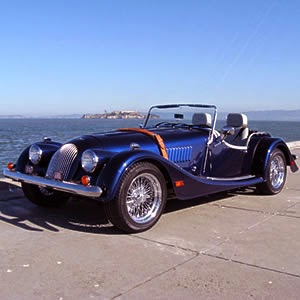
10. Morgan Plus 8. Built from 1968-2004
Take an unmistakably British roadster design, refrain from all but the most necessary updates to comply with regulations, build -- partially from wood -- in low numbers and, finally, become an icon. Now repeat. This was basically Morgan’s playbook for decades, and the team’s star forward was unquestionably the Plus 8. Built from 1968-2004 with few visual changes, this Moggie looked like ye olde sporting motorcar, but handled quite well and could keep up with many contemporary sports cars. Even today, there’s something quirky and fun about squeezing into one of these all-time British cars for a drive, especially the propane-fueled '84-'89 cars whose Buick-designed, Rover-sourced 3.5-liter V8 had fuel injection and a certain agility dulled by the bigger engines that soon followed.


9. Austin-Healey Sprite. 1958-1961
Donald Healey’s ultimate statement of affordable fun turns 50 this year, and even though the Austin-Healey Sprite’s demise came in 1969 (the less charismatic MG Midget cousin soldiered on another decade), it’s still one of the most popular all-time British cars for the street or, when modified, the track. Healey’s cost-saving approach depended on unabashed raiding of Austin and BMC parts bins, but the early Mk I Sprites of 1958-1961 featured an unmistakable front-end treatment: The Brits nicknamed these cars Frogeyes, whereas we nicknamed them Bugeyes. Regardless, these are the Sprites to own -- the ones wearing smiles, as big as their owners’.


8. Lotus Elise. First produced for Europe in 1996
Lotus founder Colin Chapman may have left us too soon, but his influence lives on with one of the all-time British cars worthy of being called a Lotus: the Elise. Chapman put Lotus on the map through obsessively cutting all unnecessary weight in his cars and tuning them for performance and handling. First produced for Europe in 1996, and finally appearing in the U.S. as a 2005 Series 2 model, some consider the Lotus Elise to be the car that saved the company’s bacon. Its success marked the long-overdue return of a genuine, reasonably affordable British sports car.


7. Landrover Series I, II and III. Between 1948 and 1985
Let’s make it perfectly clear: This is not about the squeaky-clean yuppie haulers that litter the suburbs. This is the British equivalent to America’s Jeep -- and to some Americans, the more desirable choice. Between 1948 and 1985, Series I, II and III Rovers were rugged and sparse, often matching the terrain they crossed. Like the Jeep, there was no pretense in the Rover’s presence, just incredible off-road ability. So as you might guess, this makes for a less than placid ride and handling on pavement. For the most agreeable compromise, shop for later Series IIIs from '82-'85 with their stronger half shafts and availability of limited creature comforts.


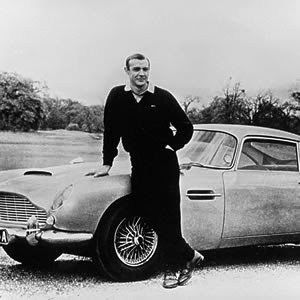
6. Aston Martin DB5. 1963
True, this is the model famous for its appearances as James Bond’s personal car, but even without all the 007 gadgets, an Aston Martin DB5 is quite a performer. Its 4.0-liter I-6 was smooth and powerful, offering up 282 horsepower and 8.1-second 0-60 mph acceleration on the way to a 143-mph top speed. This wasn’t half bad for 1963, and even now, a well-sorted DB5 doesn’t completely feel its age from behind the wheel. Production gave way to the DB6 in 1965, and the model’s celebrity association doesn’t make finding or affording one any easier. That’s not to say this all-time British car isn’t totally worth the effort.


5. Bentley Continental GT.
It was a tough call whether to recognize the impact of the 1920s 4.5-liter Blower Bentley or to celebrate the contemporary Continental GT coupe. In the end, the GT -- even if derided by some as a “German Bentley” due to the marque’s VW ownership -- takes the honor. Short of supercars at twice the price, there just aren’t many modern cars that make the statement of the Continental GT. Luxury and performance credentials are implied at a glance and immediately substantiated by the driving experience. Triple-digit speeds are attainable in a flash, but the whole affair is drama-free from inside the well-appointed cabin. Truly, that qualifies this all-time British car as a Bentley.


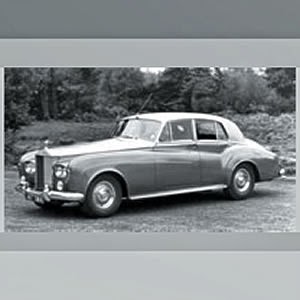
4. Rolls Royce Silver Cloud II. From 1959-1962
Today’s Phantom sedans and convertibles are impressive, but only time will tell whether their legends compare to the Silver Cloud’s. From 1959-1962, this car was the modern link to the marque’s earliest models that amazed buyers with durability, refinement and quiet, fuss-free operation. The Silver Cloud II featured understated improvements in cabin and exterior design elements that would live on in later cars for decades. Speaking of long-lived traits, the introduction of the Silver Cloud II also marked the debut of the 6.2-liter V8 and this all-time British car's “adequate” horsepower.


3. Jaguar E-type.
Earlier E-Type models from '61-'64 are seen as more desirable due to the covered headlamps and the entertaining 3.8-liter I-6 engine. For many enthusiasts, this is not a British car, this is the British car. Even Enzo Ferrari remarked that it was the most beautiful car ever made, upon its 1961 release. He wasn’t alone in this sentiment, as the immediately popular E-Type not only looked stylish enough to play with a Ferrari, it had the power to run with them. Jaguar press materials claimed 150 mph was possible, and if this was a little optimistic, it wasn’t off by much. Owners today probably aren’t as keen to explore their all-time British cars' upper limits, given the strong market and consistent demand. Earlier E-Type models from '61-'64 are seen as more desirable due to the covered headlamps and the entertaining 3.8-liter I-6 engine.


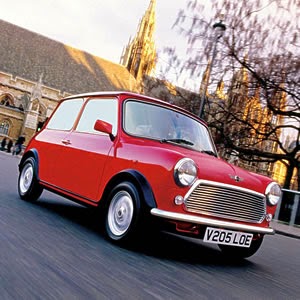
2. Austin Mini. 1959 to 1967
New MINI Coopers are typically dwarfed by just about anything on four wheels -- except maybe for the legend it’s based upon. And while the new car at least deserves an honorable mention in a review of all-time British cars, the original 1959 car made it all possible, even if it was somewhat by accident. Sir Alec Issigonis was only acting on orders to design a fuel-efficient car, not trying to create a legend -- but it turned out that both happened in the process. Thrift-minded consumers and celebrities alike celebrated the Mini, and it also made a name for itself in the racing world. Sales in the U.S. never matched those overseas, and tightening federal regulations didn’t help; so finding a decent '60-'67 model wasn't exactly easy.


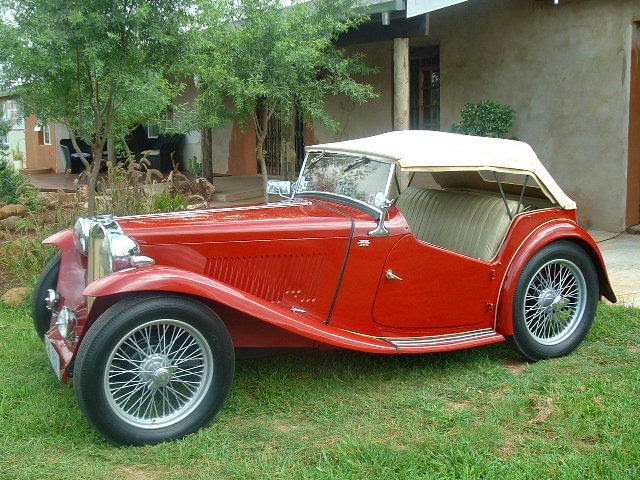
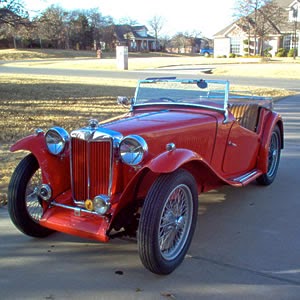
1. MG TC. 1945-1950 
You have to wonder what the state of sports cars would be today without the 1945-1950 MG TC. On its own, frankly, it was nothing spectacular. However, MGs were nothing like the typical cars across the pond, so they became a hit with American GIs abroad. Some brought the little TCs home after World War II, while others quickly bought them as dealers sprang up. Regardless, the acceptance of the unconventional car within such a car-centric culture is likely to be a major factor in what followed here and around the world.

.