Showing posts with label Isaiah Cox. Show all posts

Ever Consider Writing a Classic Car Book? This Is What Its Like

You can find a Greatest Hits collection of this author’s best works, available in Kindle and printed book format, on Amazon at - http://www.amazon.com/Classic-Car-Stories-Innovative-Meetings/dp/1530003954


I put together a collection of my short car stories/blogs and published them (you can buy it on Amazon at – http://www.amazon.com/Classic-Car-Stories-Innovative-Meetings/dp/1530003954); but self-publishing a car book was a major learning experience, at times comical.  I doubt it’s quite the experience you think it is, it sure wasn’t for me.  I’ll walk you through it.

First, you have to have some impetus for writing a book.  Be it your abnormal love for cars that resemble guppies (Citroen D.S., Jaguar XJ220, etc.), or your wife’s prodding that you need to do something with your life other than practicing car racing on Xbox Live while she works, you have to want to put a car book together.

Photo License FLICKR Creative Commons - Jaguar MENA

In my case it was likely a combination of vanity and lack of social skills that made me take up the pen.  Actually that’s a lie, I use a keyboard; the only time I take up a pen is to appease my wife’s desire for inscribed cards that border on Hallmark copyright infringements.  Lucky for her, I refuse to write Hallmarkisms and always find my own style when signing cards with platitudes. My wife Kellie is lovely though; she sweetly reassures me that I could save time and just buy the Hallmark card almost every holiday/birthday.

But I was discussing vanity and a lack of social skills.  Regarding vanity, I love when I tell one of my car stories and the room breaks into a riotous laughing.  I can’t recall this ever happening but the concept sounds great.  And on the topic of social skills, it’s seldom that I’m in a room of friends.  It turns out there just aren’t enough grumpy conservative car nuts in the local area to fill a room as my friends… or maybe there are but everyone is scared someone would die.  I don’t know.   Long story short, it was while in college that I realized that I might be able to reach someone that would laugh if I wrote my stories down and launched them out into the World Wide Web.

And that’s exactly what I did, blogging about every grand thought I had for a number of years.  After many angry friends and family members I learned that it’s not always best to write your thoughts in public record. 

After college I finally had a little more money.  Gone were the weeks I planned my eating by how many items I could buy on the dollar menu (and I ate every scrap of lettuce that fell out of that Big-n-Tasty)!

So what did I do with my new paycheck?  Responsible things like invest in my retirement and purchase a house?

No way. I started playing with motorsports.  I bought cars and motorcycles and used them hard (ish, they were still cheap and broke easily).  Then I’d blog about my experiences.  And less people were pissed off when I wrote about my car experiences.  As a matter of fact some people even seemed to enjoy my motorsport blogs.  So I kept doing it.


I’ve probably got about 10 years of motorsport blogging under my belt and according to Google my “views” are approaching 200,000.  I decided to collect some of the better short stories together and publish something of a “Greatest Hits”.  Why?  Well, remember the vanity.  Plus, if I sold a few maybe it’d pay for some racing parts!

At first blush it sounded awesome.  I’d copy and paste my old stories into book format, publish it, and watch the money roll in.

And then I started reading some of my old blogs.  Whoo boy.  Who was my editor?  That’s right, I didn’t have one.  Or if I did, it was 11 o’clock at night and she’d kept our children alive all day and couldn’t be considered super alert.  They were bad.  Just like this one probably is.

Finally I picked some stories I wasn’t completely embarrassed by and started editing them, which in some cases meant largely re-writing and making new mistakes I’ll see in two years.

It took a month to edit the stories to a point where I might not be embarrassed to have friends and family read them.

And then a different problem arose.  You see, I can’t use just any picture to illustrate my stories.  When I blog I get to use photos that photographers have released to bloggers for use as long as the blogger is not making money.  These photos are called “Creative Commons”.  But if I try to do anything commercial with the photos, like write a book, they all want me to pay for their photos or they’ll sue me. 

Side note - I used to copy and paste any photo from the internet into my blogs and then some creepy lawyer type from the UK threated to sue me with a 5 page email dissertation on why that’s illegal.  I’m poor, so in general I think people that make money on copyright pictures on the internet are lame.  I should be able to steal anything if it’s on the internet! GO BERNIE SANDERS.  Kidding… I think.

I had to delete all the Creative Common photos I’d used in my blog.  That meant I had to revert to pictures I’d actually taken for the book.  True, the book could have gone without pictures but I’ll be honest, I know my writing isn’t Ivy League, and I figured some photos could give the book a needed boost.  Who doesn’t like illustrations in books?  But consider the differences in the Creative Commons photo below and my stock photo.
Photo - Flickr Creative Commons License, Photographer: Jim Culp


Mine

Digging through all my old photos finding applicable photos for the stories took at least another couple weeks.  Bear in mind, with two very young kiddos and a wife that thankfully still likes to hang out with me for some odd reason, most of this was done in the period from 10 PM until I fell asleep with my face in the keyboard.

Finally, after a month and a half, I had what resembled a book in Microsoft Word format.  And I was going to give people their money’s worth.  This baby wasn’t short!  In 6x9 inch size it came out to 350+ pages.

So I kindly asked Kellie to proof read it.  She said “Sure, as soon as I have time”. 

I asked a few other people.  Same response.  You know who has time to read your 350 page manuscript, even if they have good intentions and possibly would if they did have time?

No one.  No one has time to read your 350 pages.  Not even your grandma.  Especially if they’ve already read a few of your blogs and already possess the knowledge that you’re not the next Hemmingway. Only my kids have time and energy to review 350 pages.


By this time you’ve read each story 15 times and you believe it says things it doesn’t.  Seriously.  When you’ve went through it a number of times your mind starts reading it without reading it.  You’ll look at a sentence and read it as perfect because that’s what you want there, when in reality you left out the subject or verb and you misspelled your best friend for life’s name.

So after a couple people have reviewed the first chapter, and you’re sure the other twenty-four are perfect, you’re ready to upload your file to the publisher.

You press upload, wait 20 minutes, and review what the publisher’s program picked up… and it’s completely jacked up.  Your chapter titles take up half a page.  Your pictures overlap text. Any special fonts you had are now in Chinese. An odd error causes a two page gap between each picture and the following text. Your photos look like they were edited by an impressionist painter.

So now you have to change things in your original Word file and wait 20 minutes, each time, to see if what you changed fixed the corresponding problem at the publisher’s software.  And during each 20 minute upload you guard the computer like a Rottweiler, protecting it from family members who might want to use it (or watch Curious George, if you’re my two year old).

Days later you’re down to 6 pages with formatting issues and you’re thinking “Screw it, six out of 350 pages ain’t half bad; let’s publish this bad boy.”

So you press publish.  And you’re really really really excited.  And then the publisher’s note pops up, “Your book must be reviewed by our team and may be available in 2 to 7 days”. 

Days later you get an email, “Your book was successfully reviewed and uploaded.  It is now available for purchase but first you must release the ransom we put on it by purchasing a copy”. 

Ok, I paraphrased but that is essentially what it says.  Hoping the review caught the formatting issues the software was jacking up you excitedly peruse the online preview they sent only to discover that the errors are still there.  You imagine the reviewers laughing when they found the screw-ups as they say, “Look what this moron is trying to publish.  Definitely not the next Hemingway.”

Impressed that a huge website is hosting your publishing, you’re sure that just by putting the book for sale you’ll sell thousands.


A day goes by and no book sells other than the one you bought.  Ok, you realize you’ll have to market.  You took marketing in college, no problem.

But you’re not as excited anymore after this cooling period.  Which is bad.  Because now you’re supposed to hock the stupid thing.  And you hate sales pitches.

First you tell your friends and family.  Strangely, with the formatting errors and because they might have already read the blogs, you’re a little embarrassed.  So you don’t tell them in person, you put it on Facebook.  Cool, they’ve been notified.  You’ve got five hundred friends, you should have 100 hundred sales in a day or two right?

The next day you have four sales.  Two of them yours, and two from your parents.

What’s even more awkward is you’re such a gem socially you haven’t logged into Facebook in 6 months.  You’ve got friends requests from people you went to Junior High with and now the only reason you’re logging in isn’t to be friendly, but to sell your stupid book. You’ve become the marketing scum you hate.  You might as well go get “Direct TV” tattooed on your butt because that’s the company you keep.

Days later the late adopters have also bought your book.  You’re up to 12 sales because there still exists friends and family that are dutiful although they’re wondering what they’re going to do with a 350 page book that’s too ugly to be used as a coaster.


You’re scrambling because you believe your creative genius just hasn’t been realized yet.  You need the right audience, car guys.  So you go out to every car magazine you can think of and explore the “Contact Us” pages collecting emails.   You spam them all with links to your book and a short biography of your illustrious writing career (“…almost 200k ‘views’ on Google!”).  You also log onto their forums and tell all their subscribers about your amazing new car book.

And then silence.  You sent 40 emails and not one person even sends you a reply.  Wait, you did get one!  Excitedly you open the reply to find, “Out of Office Reply: Bob will be gone until Tuesday”.

You decide to cruise back to the forums to find out what sort of snarky remarks people have wrote on your posts and follow up.  You find all your posts were deleted by forum moderators as spam.

The silence isn’t deafening, but your blood pressure rising might have side effects.  You haven’t been so ignored since captains were picking teams for recess basketball in 5thgrade.

You grouse to your coworkers because they’re forced to be in your presence, and at some point ask the question, “How do I sell books”?

One of them immediately responds, “You need something scandalous, put sex in each chapter.”

Your father works with someone who successfully self-published a book.  You ask that guy for tips.  1st response, “Well, car guys like scantily clad women.  Put scantily clad women in it.”


So there you have it, and that’s where I’m at.  If you want to successfully sell car books have scantily clad women in every chapter.  I’m a Christian, & father of two girls so there’ll be none of that junk for me.  So my book will probably sell 15 copies over the next two years.  I don’t think I’ll make the NY Times best sellers list.  And that’s my car book publishing experience.

Cars and Coffee is Awesome... For Not Being Sued

You can find a “Greatest Hits” collection of this author’s best works, available in Kindle and printed book format, on Amazon at - http://www.amazon.com/Classic-Car-Stories-Innovative-Meetings/dp/1530003954


I'll admit, it was only 2013 when I discovered Cars and Coffee, but I'm already a giant fan.  What could be better than: 
Staggering out of bed an hour later than weekdays, 
Not shaving or brushing your teeth, 
Wearing your ugly grease stained car themed t-shirt you love, 
Putting your chores off for at least 2 hours,
Stumbling to the car to drive to a car show at 9  a.m,
Which is conveniently in front of a coffee shop where you can grab a black coffee and a pastry, 
Watching the sun come up over the hill on a convertible Stingray, 
and talkin' cars with other nuts just like you?!

Some fine cars show up too.  For example, I don't think I'd ever seen a vintage Bentley in the flesh before.  Wow, they really are a special car.  There's a presence of grandeur when you see them in person.  It's as if the castle should be tagging behind shortly.  Makes you want to refer to funny things like the "bonnet" and consider drinking tea instead (but only very briefly). 


There's also some odd cars.  For example, the Lotus Europa is so ugly that I can't help but love it.  It looks like a great looking sports car and a little toyota pickup had a baby together.


You'll also find the American car show classics as well.  Yes, you've seen 5,000 versions of the same car, starting with the three your dad owned when you were a kid, but there are Chevelles, Corvettes, Camaros, Mustangs, etc. etc. etc..  And yes, I'd still own number 5001 in a heartbeat if I could afford one.  Thanks dad, for destruction derbying your big block Challenger because "it was ugly".  Ok, I understand that; the later Challengers were ugly, even if people are paying too much for them 20 years later.


Also, the funky cars make an appearance.  Cars that when you talk to the owner they mention things like their inability to keep the rear axle together if they actually use the power plant they put in the car.  Oops.  Some people need a poster in their garage that reminds them, "you're only as strong as your weakest link".  But I still admire these people.  They are the brave... and generally poor.  I guess I'd like to imagine I can relate, but perhaps I'm not brave.  My 1957 MGA (budgetmga.blogspot.com) has a big 72 horesepower in top shape.


Note that these guys are proud of their motors.  Yes, they did something disgusting... disgustingly awesome.  And they're proud of it.  Therefore the hood pops open.  And guys like me love it!  Don't forget, there are two parts of the car, form and function!  This is one of my suggestions to make cars and coffee a little better.  Even if you have no idea how that noisy thing under the hood works, open the hood up for those of us that do.

But lets get back to who attends, we can't forget the ridiculously expensive cars.  And these people don't play around.  Life is a competition.  "What...", someone else brought a V12 supercar?  Park right next to them so you can prove your superiority.  Ferrari or McLaren?  A question I'll never have the authority to answer.  It's like that goofy kid that drives the Geo Metro but wears a Ferrari jacket - he has no real authority to tell the world that Ferrari is so worthy but he'll wear their name on his chest 300 days a year. 

I think the McLaren looks better.  Seriously Ferrari, hoop roll bars?  What is this, a BMW Z3?  McLaren's shaped buttresses harken back to the days of 50's sports car racing; dig it!


My first couple of Cars and Coffee I took very few photos and enjoyed the coffee, cars, and people.  Then this blog started to get more popular.  What does that have to do with the price of tea in china?

I started getting death threats from photographers whose posted internet pictures I was copying and pasting into my blog.  Some creepy lawyer-esque guy sent me a two page blog response on legal precedence regarding using photos, even if they're posted on the internet for all the world to see.

I then realized that if I didn't want to have to deal with these types, I needed to have a stock of my own photos that covered all they types of cars I might have an itching to write about.  

Today I took more photos to hold in my back pocket.  Here's a few of the highlights.  And I give anyone permission to use the photos in this blog anyway they want.  I won't sue you even if I see my photos printed individually on each toilet paper square.  Who knows, it might sell!  People really could say, "I wipe my butt with (insert hated car marque here)".

A nice 60s V12 Ferrari was in attendance this morning.


But I hate to say it, I found myself thinking the unthinkable.  Pininfarina's influence is so clear that I could see a little bit of MGB in the body lines!


And my photo shooting skills are lacking.  I had to "antique" this photo because it was the only way the lack of focus made any sense.  Fail at having a vintage Ferrari V12 photo in my stock.  From the other side I got an excellent photo (sarcasm) focused on the battery post, while behind it you can barely make out a blurry Ferrari valve cover.


And I can't forget the random angle photos I shot trying to be artistic.  Too bad there's a 240Z tattooed on the leather seat and my pants are displayed prominently in the mirror.


But I did get away with a Ferrari emblem.  And it's MY PHOTO.  Bwa ha ha ha.  I can use it without anyone suing me.  Old man Ferrari probably could/would but he's dead.  Ain't it pretty?


And don't forget the bling; chrome!


I thought a Porsche logo might come in handy some day too.  The owner told me this is a very rare factory 911 paint color on this 914.  It's green.  Slight sarcasm, but I will admit it was a great color for the car.


Speaking of Porsche, I don't normally like them but this one looked great.  The color, the mirror, the bumpers, the brass cooler lines, the moderately flared fenders... I'd drive it.  Even if my own family would make tons of yuppie jokes.  Working in a city, owning a 911, and having country relatives is a recipe for ridicule.


A couple of stalls away I happened upon a vintage right hand drive Porsche that I wanted to know more about.  I couldn't find the owner, but I give him props for leaving the windows open so I could check out the interior without glare.  This is another thing I'd recommend for all attendees.  Hoods up, windows down!


Here's another fail shot at being artistic.  Quite the snout on that Porsche huh?


The unimog had a Michelin man mounted on its rear view mirror.  You probably get him for free when you buy a set of tires for this truck!  No, those aren't spaceships in the background, those are the black dots my camera introduces to photos.


If I've seen 5,000 of everything else American, I've probably seen 20,000 Mustangs.  But I still love the fastback.  Hence this shot of only the fastback.  I'm tired of the rest of the car.


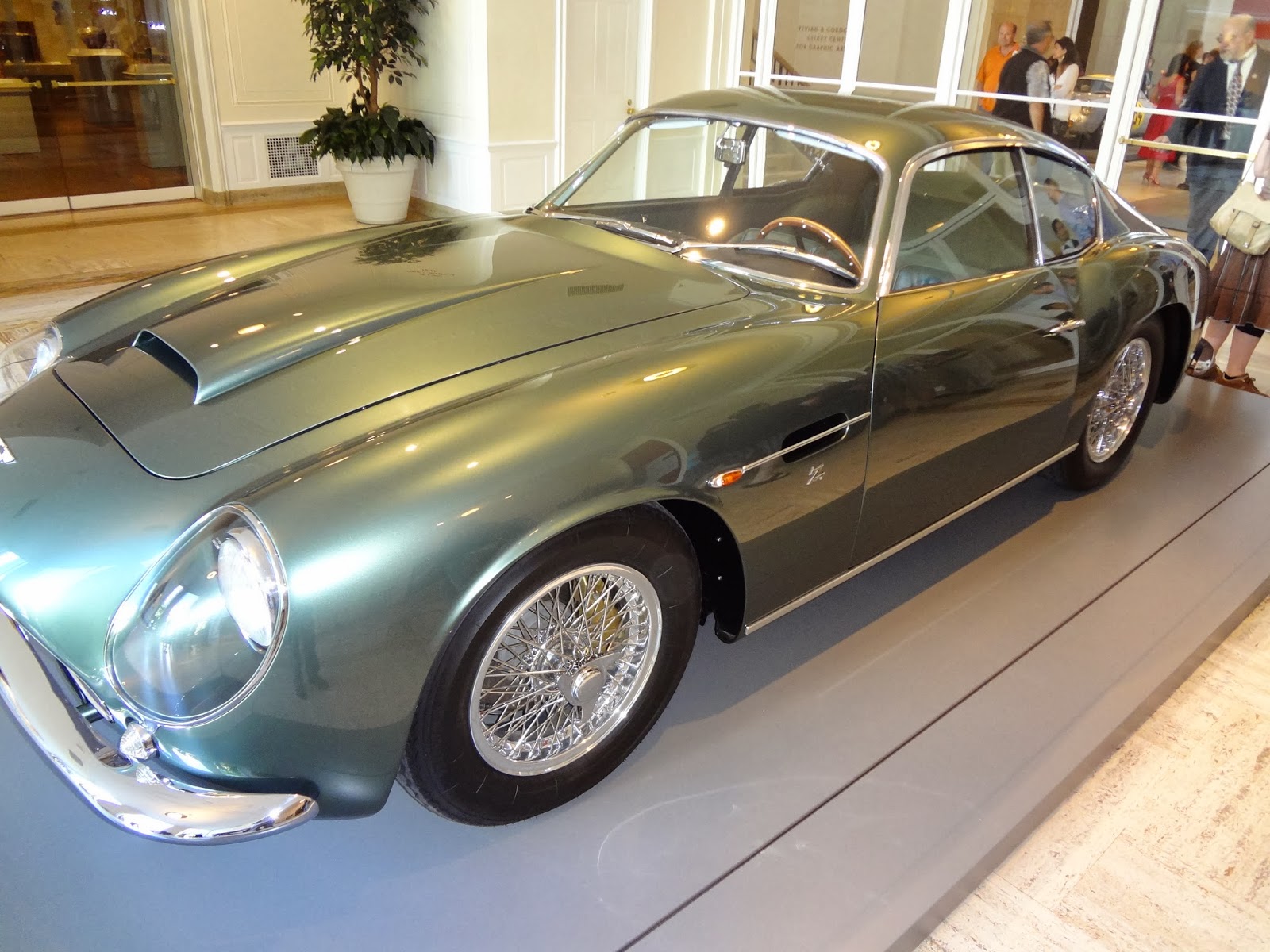
Now imagine a classic beautiful 1960's Lancia.  Then imagine if they partnered with Zagato.  Remember the magic of the Aston Zagato (picture below is also mine from the Portland museum car show; you can tell because the quality is poor and I didn't capture all of the car).


Here's what Lancia achieved with Zagato.  I wonder if Lancia asked for their money back?


I was very impressed with a classic BMW's interior.  Looked great!  I can imagine he loves to drive it.  The exterior of the car... kinda cool.  The interior... if I owned it I might sleep in it; excellent!


Well, I hope you enjoyed some of the fruits of my attempt at avoiding litigation.  Make sure you check out a Cars and Coffee.  And when you're there, and you see the goofy guy taking photos of every little thing with a crappy $200 dollar camera, make sure you say "hi" to me.  Don't worry, I'll tell you whether I think the Ferrari or McLaren is better even if you don't care about my opinion because you saw me show up in my Geo Metro (it's just my commuter!).

Vintage Sport Car Racing - Why Should Anyone Care?

You can find a “Greatest Hits” collection of this author’s best works, available in Kindle and printed book format, on Amazon at - http://www.amazon.com/Classic-Car-Stories-Innovative-Meetings/dp/1530003954


You ever wonder what's the deal with those guys that run old slow cars around the track at "vintage races" when there's so many modern, quick options?  I mean, a Miata smokes almost everyone of those old sport cars, right?  Why would you ever waste money running something old and slow?!

At the last Portland Historic Races it struck me how few people were in the stands. Our culture has no understanding of how exciting these vintage sport cars are, as well as the times and history they represent.

I've thrown this blog together as a primer.  I think that if I could share with you some of the stories I (think I) know, you might gain a fresh appreciation for vintage sport car racing.  And if you're one of my friends, maybe you won't think I'm so weird/nerdy/etc. for spending time and money on my 1957 sports car!


And for your sake I'm going to greatly abrige this and only hit you with the highs.  Although I do have pictures in my stock of quite a few of these subjects, I've decided to use period photos available from the internet because, well, they're better.  If someone owns these photos and wants me to take them down, I will.  I understand all of these pieces to be free to use because they are freely available online. I make no money on this blog, it is a hobby.

I might get a few things wrong or slightly off because I until someone pays me to do this I just don't have time to research and write a novel titled "The History of Racing".  Someone else has anyways.  And it's awesome.  If you only have 20 minutes, read this blog.  After you read this blog and realize how awesome vintage racing is, or if you have 5 hours to invest, you should watch the Shell series The History of Racing available on YouTube.


If you don't have time for Shell, well then read on.

Photo from first car race

What's considered the first car race occurred in 1894 in France.  The 1st across the line was a gentleman named de Dion but he was disqualified because his car was more of a train, running on steam using a stoker system.  Second across the line was a Peugeot.  This might be the last race that a Peugeot won.  Somewhat fitting for a car made in France, who also have not won a war of their own accord since the 1800s.

I'm kidding, Peugeot made some great racing cars during these early years and even won the Indy 500 state side.

De Dion is a well known name in car circles because shortly thereafter he designed an axle that allows each wheel to move up and down independently.  It was largely ignored and cars typically had solid rear axles.  60 Years later Jaguar adapted this De Dion rear end into their E Type sports car.  Since then all sports cars have went that direction in some form, the last holdout being the Ford Mustang, who have just announced that in 2015 they will finally get an independent rear end... 115 years after Mr. de Dion invented it.  Way to adapt quickly Ford!

France continued to be the leader in car racing.  England instituted some weird laws due to public concern about cars and horses.  You could have a car, but you had to hire someone to walk in front of you with a flag.  No wonder Mr. Toad craved speed, he was stifled by British law!

1903 Paris-Madrid

Scarcely 9 years later cars had come a long way.  See the above photo taken during the Paris-Madrid race.  Instead of rudders, some cars had steering wheels, and the overall shape was beginning to resemble less a "horseless carriage" and more our traditional car.

Unfortunately safety had not progressed along with the car.  Tires were still solid, suspension almost non-existent, brakes minimal, center-of-gravity high, etc. The Paris-Madrid of 1903 is actually France's last open-road race.  In the passenger/mechanic seat of the above car, which was leading the race is one of the Renault brothers.  After the first day of racing French government stepped in and stopped the race after nine fatalities, including the brother of Mr. Renault who was following behind in another racer.


On the American side of the pond, oval racing became popular.  This author's opinion is that this may have stemmed from the velodromes that were common to bicycle racing prior to the cars takeoff.  As oval racing is a far cry from open-road, sport car racing, other than this mention this blog will stay away from the rich history of oval racing.

The above is a picture of Eddie Rickenbacker, one of the famous pre-WW1 American racing heroes.  His autobiography is a must have.  His father died when he was 8.  Eddie went to work at a local factory to help support his family (he was the oldest child).  While working at the factory he took by-mail engineering courses.  His engineering background gave him an opportunity at an auto-shop.  The shop sponsored race cars and Eddie was given the opportunity to drive.  He became an American racing hero due to his success, nicknamed "Fast Eddie".


At the outbreak of WW1, Eddie was technically too old to become a pilot.  So he travelled to France and showed up at the base of the Hat-in-the-Ring flying squadron.  In an odd coincident, he had previously helped the base commander fix his car back in the states.  The base commander let Rickenbacker learn to fly.

By the end of the war Eddie was America's leading Ace and the leader of the Hat-in-the-Ring squadron.

Eddie went on to own the Indianapolis Speedway, and Eastern Air Lines.  In addition, he was a WW2 spy to Russia because Russia wanted his advice on their planes.  Rickenbacker crashed at sea in a B-17, surviving with his crew on a floating raft for close to a month.  A Christian, he had a small bible in his suit and Eddie instituted daily bible studies on the raft. The experience brought several of his co-raftees to believe.

His autobiography includes some prototype testing he was involved with, including a photo of a rocket powered pack the pilot would wear.

Eddie's life reads like a science-fiction, adventure fiction story.  Then you read who endorses the book. Jimmy Doolittle and a President.  No fiction here.

Fast Eddie was a model American, through and through.

In 1907 England opened the 1st purpose built racetrack, Brooklands.  Built with steep banking, the intent was that cars that drove near the top would need to turn little or at all on the banking.  The track was fast but bumpy.  The sectional concrete paving technique was the cause of the bumpy ride.  Brooklands stayed a track until WW2, although as speed increased it wasn't uncommon for Brooklands to send cars airborne.


During WW2 Brooklands was used for a airstrip and parts of the track were destroyed during bombing raids, or taken out for facilities.

James May, of Top Gear fame, recreated the Brooklands track using the local community and Scalextric race cars and track.  It's a fun watch -

But we're getting ahead of ourselves.  Let's rewind back.

WW1 put a pause to motor racing.  The world was involved in one of it's most deadly and brutal struggles.  16 million men died, and 20 million were injured.

After WW1 the world slowly recovered and again men set their mind to finding ways to appease their desire for adventure.

It's important to keep in mind, these cars were far from docile.  They had large iron motors that propelled the cars along at great speeds, but seldom had brakes to match the power of their momentum. In addition, there were little to no safety considerations.  Videos of Brooklands racing are ripe with people flying off the top of the track.  There was no seat belt or roll bar, so the drivers best hope was to be thrown clear of the machine.  The tiny windscreens provided little protection and it was common for drivers to have rocks and birds hit them in the face at 100+ mph, including one of the Le Mans winning Bentley drivers (who, coincidentally, had been refreshing himself with Cognac during pit stops).

It was at this time Bentley established their reputation.

From 1924 to 1930 Bentleys won 5 of the Le Mans races, an epic 24 hour race on a road circuit in France.  Obviously the course was closed to traffic, based on the 1903 rules, but some of the locals still didn't recognize the closure of the road for the race.  One of the old ladies that lived along the route was famous for walking across the track in indifference to the race in order to visit with her neighbors.

Almost equally as dominating as the Bentleys at Le Mans was the Type 35 Bugatti in the World Championship races.  Statistically the Type 35 has over 1000 registered wins.  It was a dominating Grand Prix race car and in 1926 took the world championship.


Another period contender for top dog was Alfa Romeo.  In 1925 Alf Romeo introduced their straight 8 motor and won the first ever world championship series. One of Alfa's top aces was Nuvolari.


This straight 8 Alfa design continued on through the early 30s.  Alfa vied with Bugatti, Delage (French), Mercedes, and Bentley for the supremacy.

National pride was endowed to each of these manufacturers. The whole country followed the races to see if their countries car would win the world championship.

It was at this time that a former racer, Enzo Ferrari, took on management of the Alfa Romeo team.  A WW1 veteran, he was approached by the family of a famous WW1 Italian ace, who requested that their sons family crest be applied to the Italian Alfa racing cars as a good luck symbol easily identifiable to Italians.  Ferrari agreed and thus was established possibly the most famous automotive symbol, the prancing horse later to be used as Ferrari's emblem.  Not many people know that the Alfa Romeo team originally wore the prancing horse.


In 1933 Adolf Hitler, and the Nazi party, came to power in Germany.  The Nazi's were set on making the other nations recognize their supremacy in all things, including motor racing.  The Nazis funneled money into race car development and the Mercedes race cars leaped in technological innovation.  The W25 Mercedes replaced Mercedes outdated SSK (designed by one Ferdinand Porsche).  The motor in the W25 would eventually reach near 500 hp.

Now the Mercedes and the Audis of this period can barely be considered sports cars, but the Alfas, Bentleys and Bugattis they were racing again are seen on the road to this day, so by default we'll lump them in with sports cars.  In truth though, these were probably the first cars that could be considered pure race car.


It was at this time that the previously mentioned Nuvolari made what may be the greatest victory of all time.

The Nazi party had been pouring money into the Mercedes and Audi teams (we'll discuss Audi in a minute).  They also poured money into their tracks.

In 1935, at Germany's famous Nurbergring, in front of the leading members of the Nazi party, driving an outdated Alfa Romeo, Nuvolari defeated the German cars and took the checkered flag.  Beyond being an unbelievable drive, it was a slap in the face for the domineering, brooding, fearsome Nazi party.  This may be one of the greatest under-dog stories of all time.


We haven't talked about the fearsome Auto Union Type D yet, but it deserves equal mention.  It's said that few men could drive this rear engined monstrosity.  The Auto Union and the Mercedes were dubbed the "silver arrows".


Hans Stuck is its most notable Type D driver.  His epic charge of the Austrian Glossglockner is still talked about, Classic and Sports Car magazine recently taking an Auto Union Type D out to the mountain to recreate the experience.  So successful was Stuck and the Type D at hill climbs, Stuck was nicknamed, "the king of the mountains" in German.  Stuck's last hill climb championship was at age 60 when he was the German hill climb champ.


Glossglockner


The Mercedes Silver Arrows also showed strong showings at Glossglockner.


The Germans touted their race cars as a matter of Nazi pride.


In 1937 the Germans improved their track at Avus with an extremely banked corner so their cars could maintain speed through the corner demonstrating how fast they truly were at nearly 500 hp.

Because Avis wasn't on the World Championship circuit, streamlined bodies were allowed.  Mercedes and Auto Union created two of the most beautiful pre-war cars ever made for this race, but yet beyond their smooth lines their stark metal bodies and nazi emblems dripped with an ominous overtone.


Ironically, in one of the more famous shots of the Avus banking at the 1937 race the American flag flies in the corner.


But half a world away, another star was coming into his own.  The year was 1938 and Juan Fangio started racing in Argentina with a beat up Ford V8.  Fangio was 28.

By 1940, in a Chevy, Fangio had become Argentina's champion.


After the war Fangio began racing in Europe.

He won, and won, and won.  His nickname became "El Maestro".  He won 5 world championships, the last in 1957 at the age of 47 years old.  He retired in 1958.  He won 24 of 52 formula one races.

Fangio went to whatever team he thought he'd have the most success with.  In the 50s he bounced around Alfa Romeo, Mercedes, Ferrari and Maserati.


If you'd like to see the Maestro at work, there's a great video on Youtube of the 1955 Belgium Grand Prix in which he destroys his competitors.  It isn't even a race.


Days after the Belgian Grand Prix, the worst tragedy in all of racing history occurred, and Fangio drove through it.  At Le Mans a pitting car forced another car to swerve around it.  The Mercedes car following the swerving car hit the rear fender and was directed airborne into the crowd.  83 spectators, and the driver were killed.  At the end of the 1955 world championship, Mercedes withdrew from racing until the 1980s.


You'll note that Fangio drove through the accident


I wish the 1955 Le Mans were a happier note, as my car made it's racing debut there.


If you watch the 1955 Belgium race you'll note that Fangio's teammate, Stirling Moss, also dominates the rest of the pack.  That same year Moss beat the Italians on their own roads at the most famous road race still in existance, the Mille Miglia (Thousand Miles).  Moss' performance, both Grand Prix and road racing/rallying, led many to believe he would be the next great.  Unfortunately a terrible accident in 1961 ended his career.  He continues to this day to be a great advocate of vintage car racing.  The British have knighted him and regard him as a national hero.


In a video on Youtube, the famous actor Patrick Steward takes lessons from Moss in an effort to emulate him.  It's a great watch.


Across the pond, over here in America, the introduction of the Corvette and T-bird had ignited a road racing passion.  Road racing became trendy with the youth and road races were packed with young men wanting to try their machines, and the stands were filled with the girls and families that had come to watch.  Adding also to the passion were the WW2 veterans, who had seen the european sport cars during their deployment and desired them.


One of the most famous of these racers was one Carroll Shelby.  A (failed) chicken farmer from Texas, he became a diplomat to the European racing circuits when his fast racing won him a seat on the World Championship circuit.

Carroll wanted to stay true to his roots and he'd often wear overalls and a cowboy hat at the races.


In 1959 Carroll and a teammate won Le Mans.  It was the first time an American had ever won Le Mans.


A heart condition caused Mr Shelby to retire after the Le Mans victory but he would be back in a prominent way in the history of road racing.

Also of note, one of the most successful women drivers appeared on the scene in the late 50's, and she was the sister of none other than Stirling Moss.

Pat Moss out and out beat everyone (men included) in the 1960 Leige-Rome-Leige rally.  Moss continued to be a prominent player in rally racing well into the 60s, including an important early win for the mini Cooper at the 1962 Tulip Rally.  


The Mini Cooper.  Specifically in "S" spec, challenged everything anyone believed.  It's light weight, peppy motor, affordable cost, low center of gravity, incredible handling and ease to maintain led to many successes over much bigger, faster cars.  It won the Monte Carlo rally outright three times.  The Mini Cooper S was nicknamed "the Giant Killer".


Remember old Carroll Shelby?  Well, around this time he got it in his head that what the world needed was a car with European handling but American muscle.  Many of the British sport cars had little 4 or 6 cylinders, while the Corvettes touted V8s.

Shelby talked Ford into providing motors, and AC into providing a chasis, for an American powered sports car.

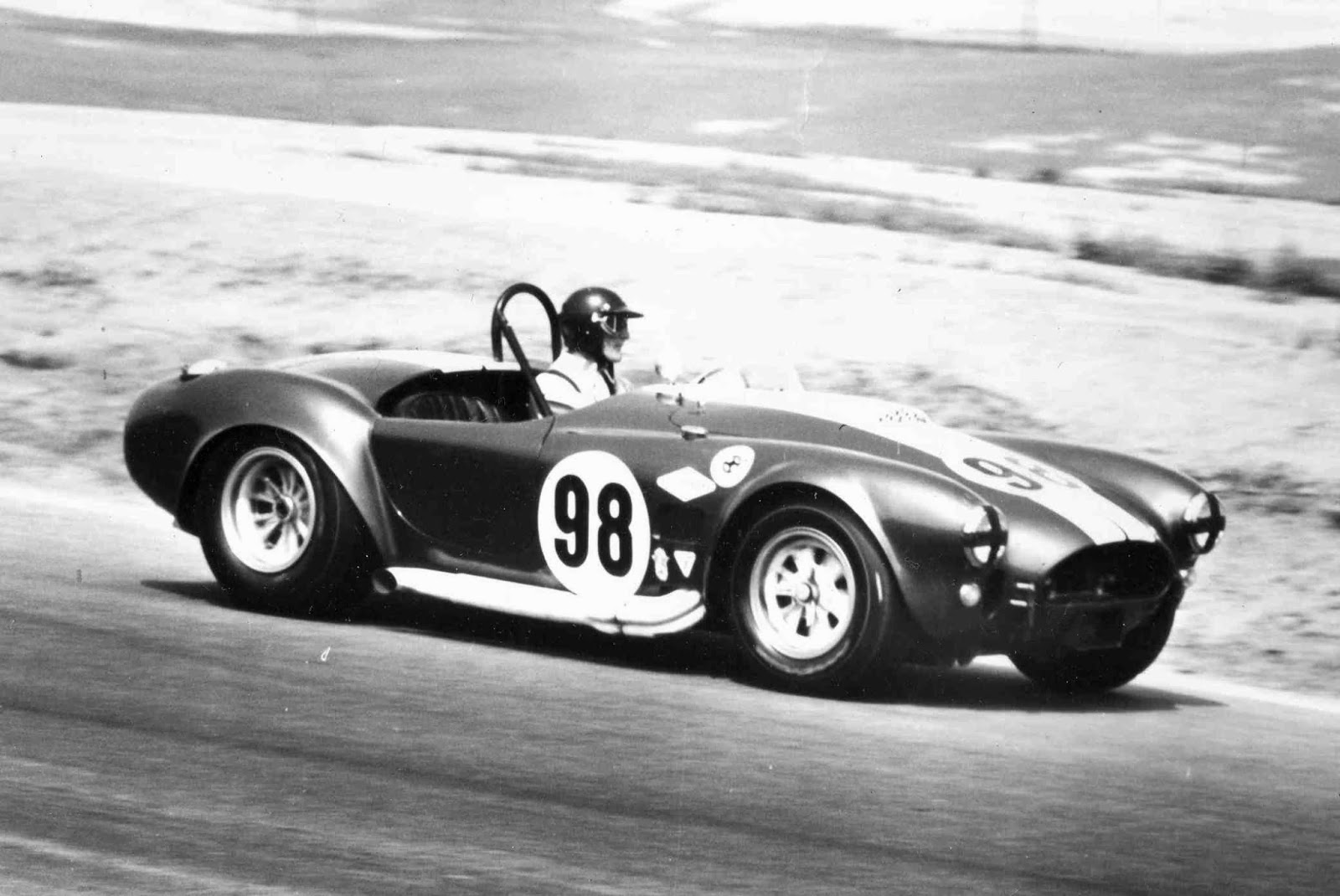
The Shelby Cobra was born.

Well, back when Carroll had been racing, Ferrari had extended a factory racing seat and when Carroll arrived in Italy, old man Ferrari reneged.  Carroll now had a burning passion to beat Ferrari at sports car racing.

Plus, Carroll's blood pumped American.  He wanted to see an American sports car win the world championship.

On the short courses his Cobra's blew the Ferrari's out of the water (once he'd figured out how to keep the axles together, the ACs not being up to the task).  But unfortunately on the long tracks, the Cobra suffered from an aerodynamic problem; the Cobra wasn't aerodynamic.


Carroll and his team went to work on an aerodynamic coupe version of the Cobra.  The Shelby Daytona was born. The Daytona won the World Championship in 1965, beating Ferrari.


Shelby then went to work with Ford on the GT40, which defeated Ferrari's 6 year winning streak at Le Mans in 1966.


Back on our side of the pond, Ford's partnership with Shelby led to some fast Mustangs produced with Shelby racing generated technology.  The Camaro was pressed to keep up.

The Trans Am racing series pitted the two against each other.  Whoever posted wins meant sales at the dealership on Monday.

Roger Penske, a famous ex-racer, partnered with Chevy to run the Camaro team.  In 1967 the fledgling Camaro didn't show much promise, but Penske felt certain he could sort the car out.

And they famously cheated.

Chevy pressed thin steel for the '67 race car.  When weighed after it's only 67 win, it was found to be 250 pounds lighter than the minimum weight.  Trans Am only allowed the win to stay in place because Penske threatened that Chevy would back out of the Trans Am series.  They did ban the car from racing in future years.

1967 Lightweight Camaro

For 1968 Penske acid dipped his cars.  Then added the weight back in at key places that would keep the center of gravity low and aid handling.  There's a story of someone leaning against the roof and causing a hand print in the thin metal.

Also, Penske again snuck the 67 lightweight car in to races.  They switched out the grille and other items for a 68.  Then they had a 68 car pass tech inspection.  When the 68 got back to the pits, they'd throw the 67s stickers on the 68 and send it back to tech inspection.  After the 68 passed a second time they'd slap the stickers back on the 67 and race the banned 1967 lightweight car.

The Penske team won 10 of 13 races in 1968, winning the Trans Am title.

They repeated the feat in 69, again winning the title.


After Trans Am, I can't think of any significant sports car racing.  Sure, there's been more Le Mans races.  And the Sports Car Club of America keeps on holding events.  But there's no racing series with street drive-able sports cars that captivates the world with it's results. Race results don't make or break a car makers sales. Nations don't anxiously follow race results.

Those old cars you see going around the track at vintage races stand for so much more than car racing.  National pride was at play when they raced.  The men that raced them were giants of men, heroes to their nation and in some cases, the world.  Nations watched those old cars race in awe.  Auto makers watched the races knowing that the race results would make them or break them.  Names like Bentley, Ferrari and Shelby were established by the results those old cars posted.

Modern cars can go around the track faster (in some cases) but the modern cars don't have the rich heritage of vintage race cars.  That's why I choose to pursue vintage racing. In some way I want to associate with the rich history of these old cars.  I want to see Nuvolari's car and imagine the Nazi's staring at it in hate.  I want to see Fangio's car and imagine El Maestro.  I want to race my MGA and imagine what a 1955 Le Mans (before the accident) must have been like.  I'd like to build a Daytona replica and see just what it was that Shelby came up with for America.

It's vintage racing for me.