Showing posts with label MG. Show all posts

1974 MGB GT


My latest acquisition - an Olde English White 1974 MGB GT with 3-door hatchback coupé body and Line-4 1799 cm3 / 109.8 cui, 62.5 kW / 85 PS / 84 hp (DIN) 5-speed manual powertrain.


1798cc 4 cylinder inline - 95 bhp @ 5400 rpm 
Gearbox : 4 speed manual with overdrive
Brakes : Disc front, drum rear 
Front suspension : Coil & Wishbone
Rear suspension v,
Steering : Rack and pinion

The MGB is a two-door sports car manufactured and marketed by the British Motor Corporation (BMC), later British Leyland, as a four-cylinder, soft-top roadster from 1962 until 1980. Variants include the MGB GT three-door 2+2 coupé (1965–74), the six-cylinder roadster and coupé MGC (1967–69), and the eight-cylinder 2+2 coupé, the MGB GT V8 (1973–76).

Replacing the MGA in 1962, production of the MGB and its variants continued until 1980, achieving sales for the MGB, MGC and MGB GT V8 combined of 523,836 cars. The MGB bodyshell was reprised in modified form with a limited run of 2,000 MG RV8 roadsters (1993–95).
.

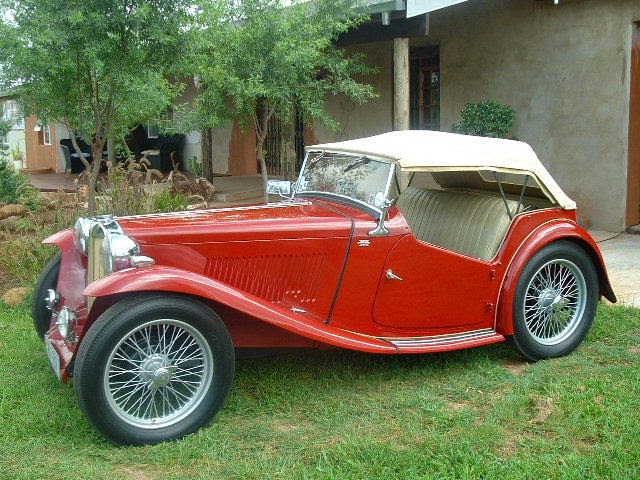
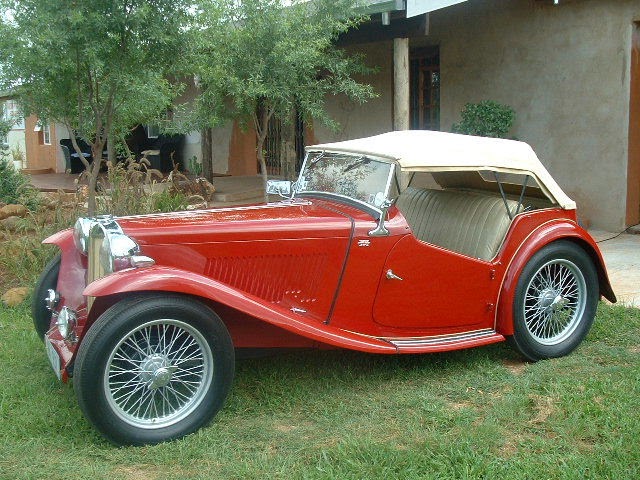
Car of the Month December 2014 is the MG TC/TD/TF

To get back into production quickly after the Second Word War, MG of Abingdon, Oxfordshire, had no option but to warm up its pre-war model, the TB. Thus the TC of 1945 had the same big 19in (48cm) wheels, fold-flat screen, crude semi-elliptic suspension and slab-tank body with ash framing. The body was wider now to give more elbow room for its passengers, while synchromesh on second, third and top gear made it more pleasant to drive. Hydraulic brakes were another welcome improvement.


1949 MG TC

Traditionalists loved it: it was nippy - 78mph (125kph) flat-out - and fun to drive. Nobody seemed to mind the heavy steering and rock-hard suspension. US servicemen stationed in the UK loved them so much they took them home and gave Americans a taste they never lost for European sports cars. Soon the C was spearheading an export drive to the USA - and that's where most of the 10,000-car production run ended up.

Charming as it was, the out-dated TC couldn't go on for ever, so fir 1949 MG introduced the TD: same chassis, same 1250cc four-cylinder engine, but with the new independent front suspension and the rack-and-pinion steering of the YA. Bumpers front and rear and smaller disc wheel didn't do much for the looks, but the TD was roomier and slightly faster, especially in higher compression MKII form from 1952. The TD was a big seller, racking up 29,664 units in its four-year production run.


1954 MG TD

The MG TD MK.II

The final flowering of the traditional MG was the TF of 1953. 

By moulding the headlamps into the front wings, which sloped the grill and fuel tank, Abingdon had gently modernised the shape. Inside, there were individual front seats and a re-styled dashboard. Early cars had the 1250cc engine, but from 1954, a 1500cc unit, giving 63bhp restored some of the performance.

The TF was a holding operation until the MGA appeared The TF looked what it was - warmed-up left-overs - and was really a holding operation while Abingdon prepared its first modern post-war model, the MGA of 1955. Ironically, the TF is the most sought-after of the three "square-rigger" post-war MG's.

MG TC/TD/TF - 1945 - 1955
ENGINE - In-line four
CAPACITY - 1250cc/1466cc
POWER - 54-63bhp
TRANSMISSION - 4-speed manual
TOP SPEED - 78-86mph (125-138kph)
NO. BUILT - 10,000 TC 29,644 TD 9,800 TF

The TD of 1949 was the first MG sports car to have the independent suspension system 

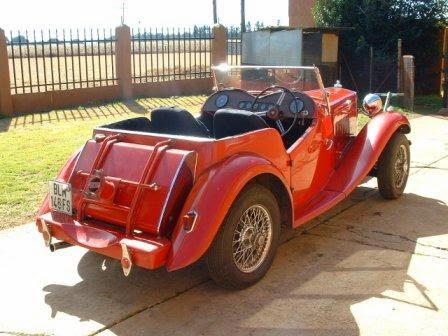
 1954 MG TD - rear

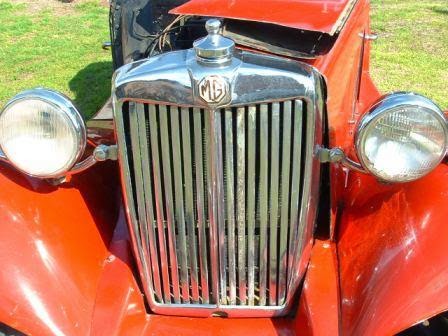
1954 MG TD - grill

1954 MG TD - rear

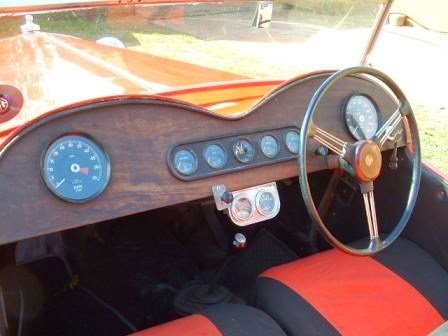
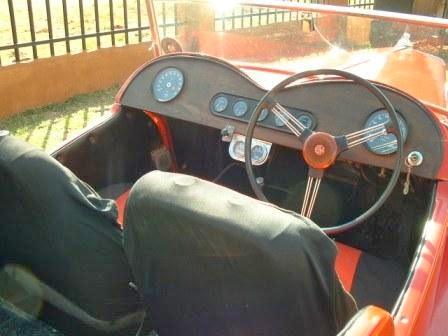
1954 MG TD - interior

1954 MG TD - interior

1954 MG TD - side view

::

Car of the Month Oct 2014 - MGA


The A was the first modern post-war MG. As the first new MG produced after the merger of Nuffield and Austin, it was also the first to use the corporate mechanical parts: much of the drive train was derived from the Austin A50 saloon. Its pretty pinched-waist body was derived from a special TD raced at Le Mans and was based on an enormously strong box-section chassis. Some said it was too strong and unnecessarily heavy, but it was certainly rigid.

Above : The A was the first modern MG in years. It had very pretty styling and a stiff box-section chassis, the last used on an MG

There was nothing ground-breaking about the suspension, with its front wishbones and leaf-spring rear beam axle, yet the handling of the A was more than a match for its contemporary Triumph and Austin Healey rivals. Bolt-on steel wheels were the standard offering, with centre-lock wires as an option. On 1489cc and 72bhp from its B Series engine, it wasn't wildly quick, but 95mph (152kph) was respectable, as was the potential 3mpg.

It was joined by a handsome coupé version in 1956 and in 1958 by the exciting twin-cam with its Harry Weslake-designed twin overhead-camshaft 1588cc engine. With 108bhp, top speed went up to 110mph (177kph). It was a highly desirable property, but the engine - based on a modified B series block - had a poor reliability record, with a reputation for burning pistons. It was available in coupé and roadster form and could be recognised by its handsome Dunlop centre-lock lightweight steel wheels. Dunlop disc brakes on all wheels were standard. High prices and its dodgy reputation kept sales low. BMC killed this most exotic of MG's in 1960.

Above : The MGA twin-cam was an exotic development using a new double overhead camshaft version of the B Series engine.

By the time, the standard MGA had become the 1600, with 80bhp, disc front brakes and genuine 100mph (160kph) ability. The only outward difference, aside from badging, was the separate rear indicators. Optional was the DeLuxe, with the standard pushrod engine, but the disc brakes and centre-lock wheels of the slow-selling twin-cam.

The final MKII 1600 of 1961 had a slightly bigger bore 1622cc engine, pushing the power output to 86bhp. You can identify a MKII by its recessed front grille and horizontal rear lights.
 
Production finished in 1962, giving way to the unitary MGB, certainly a more modern MG than the A, but not such a pretty one.


NAME : MGA (1955-62)
ENGINE : In-line 4
CAPACITY : 1489/1588/12622cc
POWER : 72-108bhp
TRANSMISSION : 4-Speed
TOP SPEED : 95-110mph (152-277kph)
NO. BUILT : 101,081

.
.

Car of the Month March 2014 MG - TC/TD/TF

To get back into production quickly after the Second Word War, MG of Abingdon, Oxfordshire, had no option but to warm up its pre-war model, the TB. Thus the TC of 1945 had the same big 19in (48cm) wheels, fold-flat screen, crude semi-elliptic suspension and slab-tank body with ash framing. The body was wider now to give more elbow room for its passengers, while synchromesh on second, third and top gear made it more pleasant to drive. Hydraulic brakes were another welcome improvement.


1949 MG TC 

Traditionalists loved it: it was nippy - 78mph (125kph) flat-out - and fun to drive. Nobody seemed to mind the heavy steering and rock-hard suspension. US servicemen stationed in the UK loved them so much they took them home and gave Americans a taste they never lost for European sports cars. Soon the C was spearheading an export drive to the USA - and that's where most of the 10,000-car production run ended up.

Charming as it was, the out-dated TC couldn't go on for ever, so fir 1949 MG introduced the TD: same chassis, same 1250cc four-cylinder engine, but with the new independent front suspension and the rack-and-pinion steering of the YA. Bumpers front and rear and smaller disc wheel didn't do much for the looks, but the TD was roomier and slightly faster, especially in higher compression MKII form from 1952. The TD was a big seller, racking up 29,664 units in its four-year production run.

1954 MG TD 

The MG TD MK.II 

The final flowering of the traditional MG was the TF of 1953. By moulding the headlamps into the front wings, which sloped the grill and fuel tank, Abingdon had gently modernised the shape. Inside, there were individual front seats and a re-styled dashboard. Early cars had the 1250cc engine, but from 1954, a 1500cc unit, giving 63bhp restored some of the performance.

The TF was a holding operation until the MGA appeared 

The TF looked what it was - warmed-up left-overs - and was really a holding operation while Abingdon prepared its first modern post-war model, the MGA of 1955. Ironically, the TF is the most sought-after of the three "square-rigger" post-war MG's.

MG TC/TD/TF - 1945 - 1955
CAPACITY - 1250cc/1466cc
ENGINE - In-line four
POWER - 54-63bhp
TRANSMISSION - 4-speed manual
TOP SPEED - 78-86mph (125-138kph)
NO. BUILT - 10,000 TC / 29,644 TD / 9,800 TF

The TD of 1949 was the first MG sports car to have the independent suspension system


1954 MG TD rear


1954 MG TD rear
 
1954 MG TD interior

1954 MG TD grill 

::


MG

1967 MGB GT

The MG is still one of the most numerically successful sports cars ever built, with more than half a million made between 1962 and its demise in 1980. At the height of its popularity, Abingdon was making more than 50,000 a year.

The main difference between the MGB and its forebear, the A, was in construction; gone was the rugged and heavy separate chassis, replaced by a light unit construction shell. The car appeared originally as an open roadster, with a three-bearing version of the venerable B Series 1798 four-cylinder engine. Torque was its main strong point - 110lb/ft (149.6Nm) at 3000rpm - but on twin SU carburettors its 95bhp at 5400rpm was creditable, if unsensational. Suspension, steering and rear axle cam straight from the BMC parts bin to keep costs down, so there were few technical highlights, but the B was a genuine 100mph (150kph) car with safe, if uninspired, handling.

It was joined in 1965 by the Pininfarina-inspired B GT, with its tail-gate rear doors and occasional rear seat - strictly for children. It was 160lb (72.7kg) heavier than the roadster, but had the fie-bearing engine and quieter rear axle from the start.

1967 MGB GT 

In 1974, MG announced the black bumper cars with grotesque plastic bumpers and increased ride height to keep the aging model legal in North America, where most production will went. Performance was in decline - the GT wouldn't even manage 100mph - and the handling was ruined by its new, taller stance, but the car continued to sell because it was one of few open cars available.

1967 MGB GT rear

There were two rather more exciting versions of this evergreen sports car to come.

The MGC of 1967 was a three-litre version of the B, designed to take the place of the "Big" Healey 3000 models. Bigger 15-inchwheels and a bonnet bulge differentiated the C from the B and, underneath, thee was torsion-bar front suspension rather than wishbones. With a 145bhp six-cylinder engine, the C was certainly fast, but nose-heavy weight distribution spoiled the handling.

Four years later, British Leyland answered calls for a more powerful version of the car with the GT V-eight. With its smooth, quiet and very torquey Rover 3.5 V-eight this was a much better prospect, but yet again success eluded this 125mph (201kph) machine. It didn't look different enough from the stock four-cylinder car, and the critics panned its lack of suspension refinement, the wind noise and its relatively high price.

Few wanted the V-eight in its day - only 2,591 were sold between 1973 and 1976 - but today it is a sought-after and entertaining classic, easily the best B of the lot.

MGB - 1962-80
ENGINE - 4-cylinder
CAPACITY - 1798cc
POWER - 95bhp
TRANSMISSION - 4-speed with over-drive
TOP SPEED - 106mph (170kph)
NO. BUILT - 387,259 MGB's 125,621 GT's

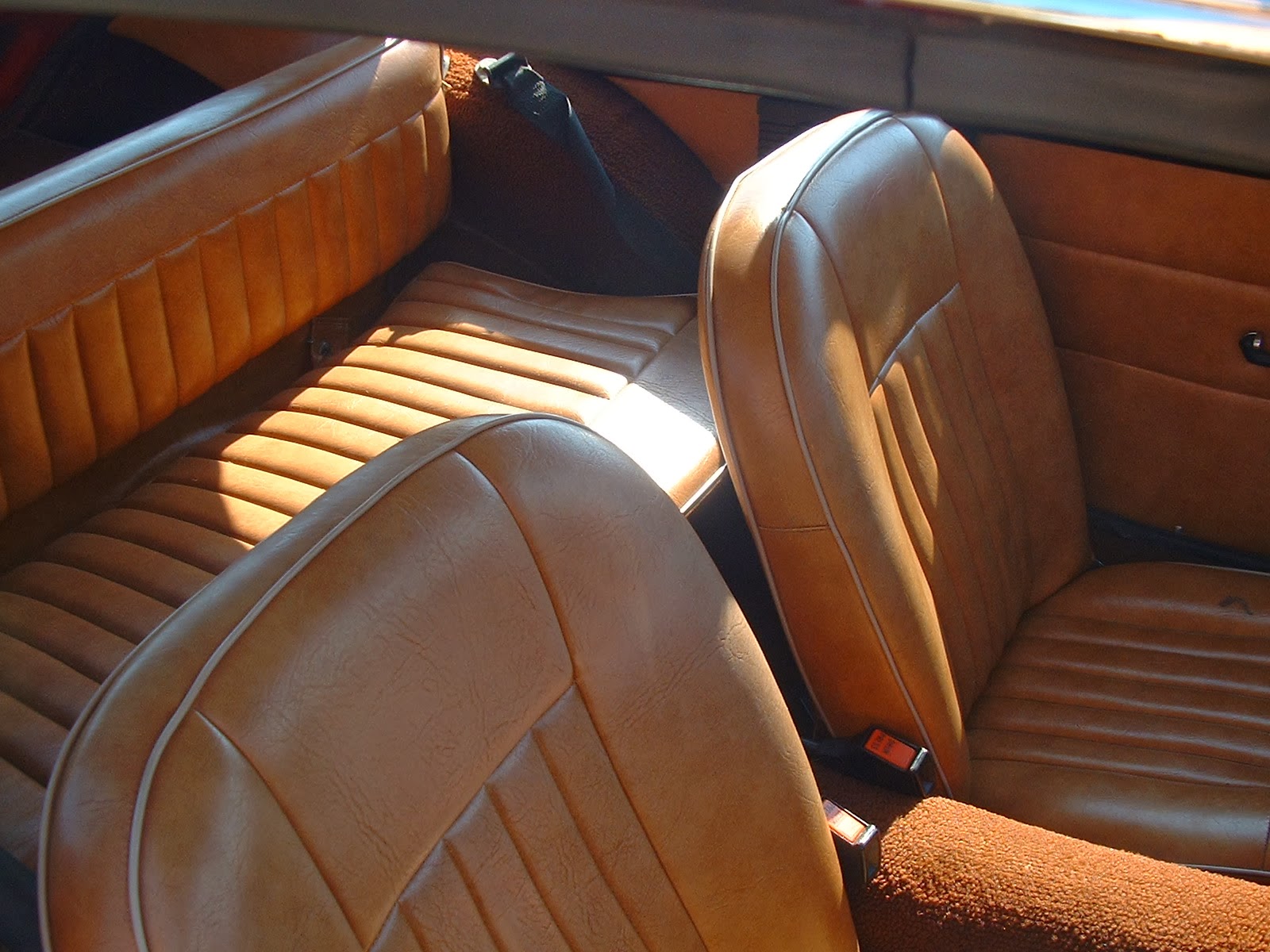
1967 MGB GT interior

1967 MGB GT interior

1967 MGB GT interior- rear

1967 MGB GT interior

1967 MGB GT - rear view

An early MGB on rare disc wheels. the styling was influenced by Pininfarina. 

::
 

All British Field Meet - Portland Oregon

You can find a “Greatest Hits” collection of this author’s best works, available in Kindle and printed book format, on Amazon at - http://www.amazon.com/Classic-Car-Stories-Innovative-Meetings/dp/1530003954


I drove my MGA out to the Portland All British Field Meet this weekend.  Because it's about a 45 minute drive from my house, I could have been high from the long exposure to burning oil smoke but I had a great time.  There weren't as many eye catching oddities as I thought there'd be but there were a few I saw that I thought I'd share.

The sun coming up over the tented land rovers was pretty cool.  Would love to have one of these someday.  What a fun rig!


This Bentley caught my attention for quite a while.  There's just something about these cars that make them one of the quid-essential in my book.  It's probably just because I read The Wind in the Willows too many times and Mr. Toad is one of my favorite literary characters. I wonder where Bentley went so wrong; they look like pimped out Chryslers now.


 If you take a look at the picture of the "suspension" you realize there can't be much because I can't imagine that brake line running from the frame to the wheel assembly has much flex.


Is there a better looking motor than an e-type?  Gotta love the polished valve cover and fuel injection on this one.


MGs dominated the show.  A really strong showing.  If you have any questions about your restoration I'm sure you can find the advice here.


The car below was runner up for best in show.  The honors couldn't have went to a nicer guy as Craig Cootsona was glad (literally) to answer questions and brought a stack of build sheets to handout if anyone wanted to copy his techniques/vendors/parts.  He said he's been working on this car since 2004 and just 6 weeks ago they "finished" it.  He's been building it with his father who was also in attendance.


Over at the track the Sovren vintage racers were having a blast.  Well, hopefully they were.  In comparison with other races, like the Oregon Trail Rally, these guys have no crowds, often get taken off the track for cars dying/running off the road, don't dice it up much, and have to race in groups with a number of other classes because there's not enough people to field many of the classes.  I'd still do it, but I'm not sure it's the most fun racing.  My friends that compete in the Pro3 class seem to have a lot of fun and do more actual racing.


In the area for "Other Marques" a few rarities (at least in the states) were in attendance.  I can't recall ever seeing any of the 3 cars below before.


Inside a big rolls royce someone had taken great pains to be as historically accurate as possible.


In the British car magazine you read often about how fun, and quick the Lotus Elan's are.  You don't realize why until you're standing next to it.  These cars are tiny and make the twin cam four mounted in it look big, especially those massive side-draft carbs.


Some fine Austin Healeys also helped fill the field.


This little red racer looked like a lot of fun!


Here's Pat Moss' rally car!  Pat Moss was so fast she would beat the men flat out and take 1st place.  I think it's funny to hear about Danica like it's some great movement for women when she's got nothing on Pat Moss 40 years ago.  These women (Pat and her navigators) were classy too!  I've read that their appearance was important to the factories image so they'd quickly clean up at checkpoints to make sure they looked good when their pictures were being taken.


Ok, after ogling this car for at least 10 minutes I got to talk to the owner.  He admitted he was buffaloing me and this car was just a beat up old Healey he bought for $9500 and didn't want to spend $20k restoring.  I'm impressed.  He did a great job recreating a beat up rally car!


There were some fine looking big cats in attendance too.


Again, I couldn't help taking a picture of an e-type motor.


This little MGC was the only B/C in attendance wearing it's hard top.  These hard tops are great and compliment the MGB shape well.  I'd even go out on a limb and say MGBs look best with these tops on.


The cleanest MGB in attendance was a nice little blue one with a supercharger.  A really clean car!


As an MGA owner, I'm naturally drawn to them and there were some great examples in attendance.


Elvas were built with MGA motors but had upgraded suspension and a fiberglass body.  The body shape is unique and may not be for everyone but, unless Elva got the suspension geometry completely wrong, they must be fun to drive.


One of the most impressive cars in attendance was this all original 2nd owner (same family) car.  The original owner (who passed in 2010) used this car hard.  The current owner (a nephew) has 10 boards full of rally pins.  Great to see!  The owner says he's continuing to rally it in the Klamath Falls area.


What I want to know is, where is the dealership to test drive these little Morgans?!


Hiding over with the Jaguars was this early MG.  Most striking was it's straight shifter pattern.


If you registered early for the event you could post a picture of  your car for the program.  You can find those pictures at - http://www.abfm-pdx.com/2013/registered_vehicles.

In the pits was this Fangio South American racer replica.  At least I'm assuming it was a replica.  There was some serious money in the pits though so it may not be a replica!  It seems a little too nice for a '39 South American race car though.


Sunday morning kicked off the swap meet.  Kellie and I brought down some of the junk laying around my garage and made our gas money back for the two days!


The cars for sale seemed to be going fast and there were some neat ones to buy.  The british pickup below was my favorite being offered.  I've never seen anything quite like it.


This MGA parts car was going for a grand!


This sprite had been there minutes when a sold sign was put on its windshield.


I came out pretty well, found some stuff I needed for a total of $57.  Can't get much for $57 these days!


The 2013 All British Field meet was a great success with a lot of interesting and great looking cars attending.  Throw in some racing action and a swap meet and you've got a great weekend.  I also didn't manage to get pictures of the many events that were for charity (autocross, slalom and land rovers giving rides through the motocross track) but they added a touch of class to the event.  In comparison to the american hot rod shows there is an air of bravado that is missing at these British events, for better or worse.  Old Nigel just doesn't have the same attitude as the American's raised in the sixties.  Somehow this equates to cars that turn, instead of going fast in a straight line... and less Harley t-shirts/vesties (score a big point for the British on the last one).